Moral outsourcing is the placing of responsibility for ethical decision-making onto external entities, often algorithms. The term is often used in discussions of computer science and algorithmic fairness, but it can apply to any situation in which one appeals to outside agents in order to absolve themselves of responsibility for their actions. In this context, moral outsourcing specifically refers to the tendency of society to blame technology, rather than its creators or users, for any harm it may cause. == Definition == The term "moral outsourcing" was first coined by Dr. Rumman Chowdhury, a data scientist concerned with the overlap between artificial intelligence and social issues. Chowdhury used the term to describe looming fears of a so-called “Fourth Industrial Revolution” following the rise of artificial intelligence. Moral outsourcing is often applied by technologists to shrink away from their part in building offensive products. In her TED Talk, Chowdhury gives the example of a creator excusing their work by saying they were simply doing their job. This is a case of moral outsourcing and not taking ownership for the consequences of creation. When it comes to AI, moral outsourcing allows for creators to decide when the machine is human and when it is a computer - shifting the blame and responsibility of moral plights off of the technologists and onto the technology. Conversations around AI and bias and its impacts require accountability to bring change. It is difficult to address these biased systems if their creators use moral outsourcing to avoid taking any responsibility for the issue. One example of moral outsourcing is the anger that is directed at machines for “taking jobs away from humans” rather than companies for employing that technology and jeopardizing jobs in the first place. The term "moral outsourcing" refers to the concept of outsourcing, or enlisting an external operation to complete specific work for another organization. In the case of moral outsourcing, the work of resolving moral dilemmas or making choices according to an ethical code is supposed to be conducted by another entity. == Real-world applications == In the medical field, AI is increasingly involved in decision-making processes about which patients to treat, and how to treat them. The responsibility of the doctor to make informed decisions about what is best for their patients is outsourced to an algorithm. Sympathy is also noted to be an important part of medical practice; an aspect that artificial intelligence, glaringly, is missing. This form of moral outsourcing is a major concern in the medical community. Another field of technology in which moral outsourcing is frequently brought up is autonomous vehicles. California Polytechnic State University professor Keith Abney proposed an example scenario: "Suppose we have some [troublemaking] teenagers, and they see an autonomous vehicle, they drive right at it. They know the autonomous vehicle will swerve off the road and go off a cliff, but should it?" The decision of whether to sacrifice the autonomous vehicle (and any passengers inside) or the vehicle coming at it will be written into the algorithms defining the car's behavior. In the case of moral outsourcing, the responsibility of any damage caused by an accident may be attributed to the autonomous vehicle itself, rather than the creators who wrote the protocol the vehicle will use to "decide" what to do. Moral outsourcing is also used to delegate the consequences of predictive policing algorithms to technology, rather than the creators or the police. There are many ethical concerns with predictive policing due to the fact that it results in the over-policing of low income and minority communities. In the context of moral outsourcing, the positive feedback loop of sending disproportionate police forces into minority communities is attributed to the algorithm and the data being fed into this system--rather than the users and creators of the predictive policing technology. == Outside of technology == === Religion === Moral outsourcing is also commonly seen in appeals to religion to justify discrimination or harm. In his book What It Means to be Moral, sociologist Phil Zuckerman contradicts the popular religious notion that morality comes from God. Religion is oftentimes cited as a foundation for a moral stance without any tangible relation between the religious beliefs and personal stance. In these cases, religious individuals will "outsource" their personal beliefs and opinions by claiming that they are a result of their religious identification. This is seen where religion is cited as a factor for political beliefs, medical beliefs, and in extreme cases an excuse for violence. === Manufacturing === Moral outsourcing can also be seen in the business world in terms of manufacturing goods and avoiding environmental responsibility. Some companies in the United States will move their production process to foreign countries with more relaxed environmental policies to avoid the pollution laws that exist in the US. A study by the Harvard Business Review found that "in countries with tight environmental regulation, companies have 29% lower domestic emissions on average. On the other hand, such a tightening in regulation results in 43% higher emissions abroad." The consequences of higher pollution rates are then attributed to the loose regulations in these countries, rather than on the companies themselves who purposefully moved into these areas to avoid strict pollution policy.
Conversica
Conversica is a US-based cloud software technology company, headquartered in San Mateo, California, that provides two-way AI-driven conversational software and a suite of Intelligent Virtual Assistants for businesses to engage customers via email, chat, and SMS. == History == 2007: The company was founded by Ben Brigham in Bellingham, Washington, originally as AutoFerret.com. The company's initial product was a Customer Relationship Management (CRM) targeted at automotive dealerships. This soon expanded to lead generation, and then lead validation and qualification. The AI Conversica uses currently was made to follow up on and filter out low-quality leads. The focus of the company shifted toward this automated lead engagement technology. 2010: The company started commercially selling AVA, the first Automated Virtual Assistant for sales, and the company name was changed to AVA.ai. Early customers for AVA were automotive dealerships. As the company moved away from generating leads themselves, and providing the CRM themselves, it became necessary to integrate with existing CRM and Marketing Automation platforms, such as DealerSocket, VinSolutions and Salesforce. 2013: The company raised $16m Series A funding, led by Kennet Partners, and named Mark Bradley as CEO. It also moved its headquarters from Bellingham, Washington to Foster City, California. 2014: The company changed its name from AVA.ai to Conversica. 2015: Alex Terry joined Conversica as its CEO. The business expanded to include customers in additional verticals, including technology, education, and financial services. 2016: The company raised $34m Series B funding, led by Providence Strategic Growth. 2017: Conversica expanded its intelligent automation platform and IVAs to support additional communication channels (e-mail and SMS text messaging) and communication languages. Conversica also opened a new technology center in Seattle, Washington to expand its AI and machine learning capabilities. 2018: The company raised $31m Series C funding, led by Providence Strategic Growth. Conversica also acquired Intelligens.ai, providing a regional presence in Latin America with an office in Las Condes, Santiago, Chile. The company launched an AI-powered Admissions Assistant for Higher Education industry. 2019: Conversica was selected by Fast Company magazine as one of the Top 10 Most Innovative AI Companies in the World, and was named Marketo's Technology Partner of the Year. The company officially expanded into the EMEA region with the opening of a London office. As of August 2019, Conversica has over 50 different integrations with third parties. In October Conversica won three awards at the fourth annual Global Annual Achievement Awards for Artificial Intelligence. Also that month, Alex Terry stepped down from his role as CEO and was replaced by Jim Kaskade. 2020: As part of Conversica's response to COVID-19, they optimized the business to become profitable in both 2Q20 and 3Q20, before reinvesting in 4Q20. The company transitioned both international operations in EMEA and LATAM to an indirect model with partners (LeadFabric and Nectia Cloud Solutions respectively), and moved a portion of its US-based employees to near-shore centers in Mexico and Brazil, effectively downsizing the company from 250 to 200. Conversica's reseller partner, Nectia, is a major Latin American affiliate and Chile's number one Salesforce partner, and, as part of the partnership, Nectia devoted capital to a brand new company segment, Predict-IA, dedicated to web-based artificial intelligent solutions. Predict-IA was able to immediately service all LATAM opportunities and clients with Conversica's AI Assistants with end-to-end services (marketing, sales, professional services, customer success, and technical support). Conversica's reseller partner, Leadfabric, has offices in Belgium, Amsterdam, Paris, UK, Taiwan, and Romania. == Technology == Conversica's Revenue Digital Assistants™ are AI assistants who engage with leads, prospects, customers, employees, and other persons of interest (Contacts) in a two-way human-like manner, via email, SMS text, and website chat, in English, French, German, Spanish, Portuguese, and Japanese. The RDAs are built on an Intelligent Automation platform that leverages natural language understanding, natural language processing, natural language generation, deep learning and machine learning. The Assistants are generally deployed alongside sales and marketing, customer success, account management, and higher education admissions teams, as part of an augmented workforce. The Intelligent Automation platform integrates with over 50 external systems, including CRM, Marketing Automation, and other systems of record. A partial list of integration partners includes: Salesforce, Marketo, Oracle, HubSpot, DealerSocket, Reynolds & Reynolds, CDK Global, VinSolutions and many more.
Wetware (brain)
Wetware is a term drawn from the computer-related idea of hardware or software, but applied to biological life forms. == Usage == The prefix "wet" is a reference to the water found in living creatures. Wetware is used to describe the elements equivalent to hardware and software found in a person, especially the central nervous system (CNS) and the human mind. The term wetware finds use in works of fiction, in scholarly publications and in popularizations. The "hardware" component of wetware concerns the bioelectric and biochemical properties of the CNS, specifically the brain. If the sequence of impulses traveling across the various neurons are thought of symbolically as software, then the physical neurons would be the hardware. The amalgamated interaction of this software and hardware is manifested through continuously changing physical connections, and chemical and electrical influences that spread across the body. The process by which the mind and brain interact to produce the collection of experiences that we define as self-awareness is in question. == History == Although the exact definition has shifted over time, the term Wetware and its fundamental reference to "the physical mind" has been around at least since the mid-1950s. Mostly used in relatively obscure articles and papers, it was not until the heyday of cyberpunk, however, that the term found broad adoption. Among the first uses of the term in popular culture was the Bruce Sterling novel Schismatrix (1985) and the Michael Swanwick novel Vacuum Flowers (1987). Rudy Rucker references the term in a number of books, including one entitled Wetware (1988): ... all sparks and tastes and tangles, all its stimulus/response patterns – the whole bio-cybernetic software of mind. Rucker did not use the word to simply mean a brain, nor in the human-resources sense of employees. He used wetware to stand for the data found in any biological system, analogous perhaps to the firmware that is found in a ROM chip. In Rucker's sense, a seed, a plant graft, an embryo, or a biological virus are all wetware. DNA, the immune system, and the evolved neural architecture of the brain are further examples of wetware in this sense. Rucker describes his conception in a 1992 compendium The Mondo 2000 User's Guide to the New Edge, which he quotes in a 2007 blog entry. Early cyber-guru Arthur Kroker used the term in his blog. With the term getting traction in trendsetting publications, it became a buzzword in the early 1990s. In 1991, Dutch media theorist Geert Lovink organized the Wetware Convention in Amsterdam, which was supposed to be an antidote to the "out-of-body" experiments conducted in high-tech laboratories, such as experiments in virtual reality. Timothy Leary, in an appendix to Info-Psychology originally written in 1975–76 and published in 1989, used the term wetware, writing that "psychedelic neuro-transmitters were the hot new technology for booting-up the 'wetware' of the brain". Another common reference is: "Wetware has 7 plus or minus 2 temporary registers." The numerical allusion is to a classic 1957 article by George A. Miller, The magical number 7 plus or minus two: some limits in our capacity for processing information, which later gave way to Miller's law.
Accelerated Linear Algebra
XLA (Accelerated Linear Algebra) is an open-source compiler for machine learning developed by the OpenXLA project. XLA is designed to improve the performance of machine learning models by optimizing the computation graphs at a lower level, making it particularly useful for large-scale computations and high-performance machine learning models. Key features of XLA include: Compilation of Computation Graphs: Compiles computation graphs into efficient machine code. Optimization Techniques: Applies operation fusion, memory optimization, and other techniques. Hardware Support: Optimizes models for various hardware, including CPUs, GPUs, and NPUs. Improved Model Execution Time: Aims to reduce machine learning models' execution time for both training and inference. Seamless Integration: Can be used with existing machine learning code with minimal changes. XLA represents a significant step in optimizing machine learning models, providing developers with tools to enhance computational efficiency and performance. == OpenXLA Project == OpenXLA Project is an open-source machine learning compiler and infrastructure initiative intended to provide a common set of tools for compiling and deploying machine learning models across different frameworks and hardware platforms. It provides a modular compilation stack that can be used by major deep learning frameworks like JAX, PyTorch, and TensorFlow. The project focuses on supplying shared components for optimization, portability, and execution across CPUs, GPUs, and specialized accelerators. Its design emphasizes interoperability between frameworks and a standardized set of representations for model computation. == Components == The OpenXLA ecosystem includes several core components: XLA – A deep learning compiler that optimizes computational graphs for multiple hardware targets. PJRT – A runtime interface that allows different back-ends to connect to XLA through a consistent API. StableHLO – A high-level operator set intended to serve as a stable, portable representation for ML models across compilers and frameworks. Shardy – An MLIR-based system for describing and transforming models that run in distributed or multi-device environments. Additional profiling, testing, and integration tools maintained under the OpenXLA organization. == Users and adopters == Several machine learning frameworks can use or interoperate with OpenXLA components, including JAX, TensorFlow, and parts of the PyTorch ecosystem. The project is developed with participation from multiple hardware and software organizations that contribute back-end integrations, testing, or specifications for their devices. This includes Alibaba, Amazon Web Services, AMD, Anyscale, Apple, Arm, Cerebras, Google, Graphcore, Hugging Face, Intel, Meta, NVIDIA and SiFive. == Supported target devices == x86-64 ARM64 NVIDIA GPU AMD GPU Intel GPU Apple GPU Google TPU AWS Trainium, Inferentia Cerebras Graphcore IPU == Governance == OpenXLA is developed as a community project with its work carried out in public repositories, discussion forums, and design meetings. Some components, such as StableHLO, began with stewardship from specific organizations and have outlined plans for more formal and distributed governance models as the project matures. == History == The project was announced in 2022 as an effort to coordinate development of ML compiler technologies across major AI companies, notably: Alibaba, Amazon Web Services, AMD, Anyscale, Apple, Arm, Cerebras, Google, Graphcore, Hugging Face, Intel, Meta, NVIDIA and SiFive.. It consolidated the XLA compiler, introduced StableHLO as a portable operator set, and created a unified structure for additional tools. Development continues within multiple repositories under the OpenXLA umbrella. It was founded by Eugene Burmako, James Rubin, Magnus Hyttsten, Mehdi Amini, Navid Khajouei, and Thea Lamkin from Google's Machine Learning organization.
Non-human
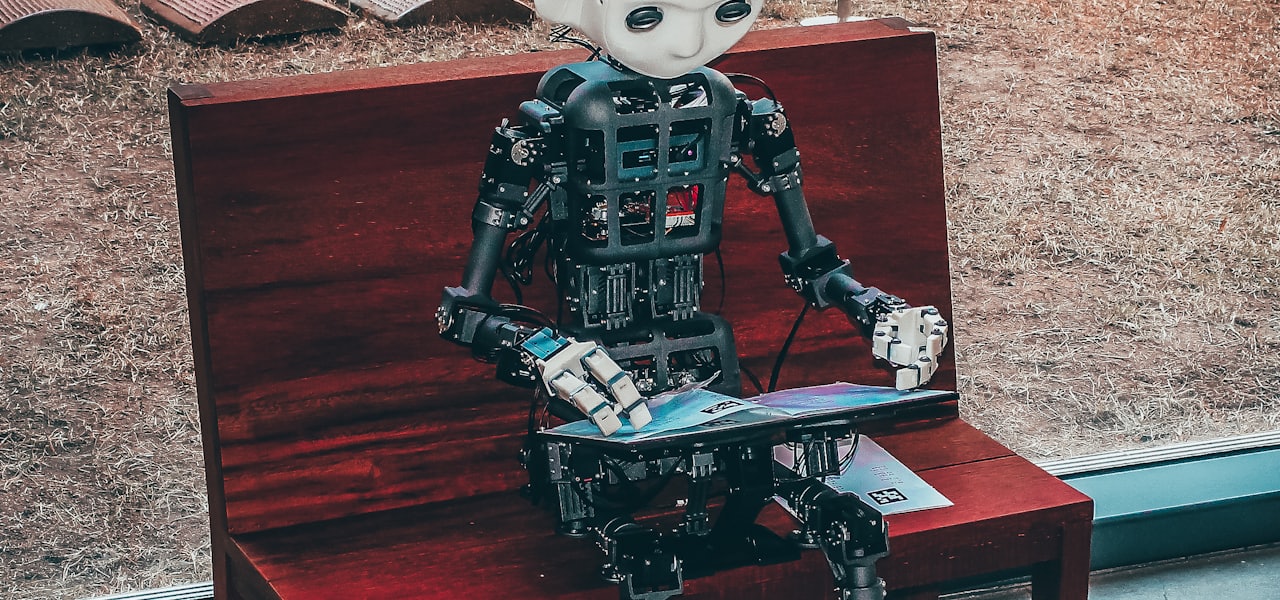
Non-human (also spelled nonhuman) is any entity displaying some, but not enough, human characteristics to be considered a human. The term has been used in a variety of contexts and may refer to objects that have been developed with human intelligence, such as robots or vehicles. == Organisms == === Animal rights and personhood === In the animal rights movement, it is common to distinguish between "human animals" and "non-human animals". Participants in the animal rights movement generally recognize that non-human animals have some similar characteristics to those of human persons. For example, various non-human animals have been shown to register pain, compassion, memory, and some cognitive function. Some animal rights activists argue that the similarities between human and non-human animals justify giving non-human animals rights that human society has afforded to humans, such as the right to self-preservation, and some even wish for all non-human animals or at least those that bear a fully thinking and conscious mind, such as vertebrates and some invertebrates such as cephalopods, to be given a full right of personhood. === The non-human in philosophy === Contemporary philosophers have drawn on the work of Henri Bergson, Gilles Deleuze, Félix Guattari, and Claude Lévi-Strauss (among others) to suggest that the non-human poses epistemological and ontological problems for humanist and post-humanist ethics, and have linked the study of non-humans to materialist and ethological approaches to the study of society and culture. == Software and robots == The term non-human has been used to describe computer programs and robot-like devices that display some human-like characteristics. In both science fiction and in the real world, computer programs and robots have been built to perform tasks that require human-computer interactions in a manner that suggests sentience and compassion. There is increasing interest in the use of robots in nursing homes and to provide elder care. Computer programs have been used for years in schools to provide one-on-one education with children. The Tamagotchi toy required children to provide care, attention, and nourishment to keep it "alive".
Computational heuristic intelligence
Computational heuristic intelligence (CHI) refers to specialized programming techniques in computational intelligence (also called artificial intelligence, or AI). These techniques have the express goal of avoiding complexity issues, also called NP-hard problems, by using human-like techniques. They are best summarized as the use of exemplar-based methods (heuristics), rather than rule-based methods (algorithms). Hence the term is distinct from the more conventional computational algorithmic intelligence, or symbolic AI. An example of a CHI technique is the encoding specificity principle of Tulving and Thompson. In general, CHI principles are problem solving techniques used by people, rather than programmed into machines. It is by drawing attention to this key distinction that the use of this term is justified in a field already replete with confusing neologisms. Note that the legal systems of all modern human societies employ both heuristics (generalisations of cases) from individual trial records as well as legislated statutes (rules) as regulatory guides. Another recent approach to the avoidance of complexity issues is to employ feedback control rather than feedforward modeling as a problem-solving paradigm. This approach has been called computational cybernetics, because (a) the term 'computational' is associated with conventional computer programming techniques which represent a strategic, compiled, or feedforward model of the problem, and (b) the term 'cybernetic' is associated with conventional system operation techniques which represent a tactical, interpreted, or feedback model of the problem. Of course, real programs and real problems both contain both feedforward and feedback components. A real example which illustrates this point is that of human cognition, which clearly involves both perceptual (bottom-up, feedback, sensor-oriented) and conceptual (top-down, feedforward, motor-oriented) information flows and hierarchies. The AI engineer must choose between mathematical and cybernetic problem solution and machine design paradigms. This is not a coding (program language) issue, but relates to understanding the relationship between the declarative and procedural programming paradigms. The vast majority of STEM professionals never get the opportunity to design or implement pure cybernetic solutions. When pushed, most responders will dismiss the importance of any difference by saying that all code can be reduced to a mathematical model anyway. Unfortunately, not only is this belief false, it fails most spectacularly in many AI scenarios. Mathematical models are not time agnostic, but by their very nature are pre-computed, i.e. feedforward. Dyer [2012] and Feldman [2004] have independently investigated the simplest of all somatic governance paradigms, namely control of a simple jointed limb by a single flexor muscle. They found that it is impossible to determine forces from limb positions- therefore, the problem cannot have a pre-computed (feedforward) mathematical solution. Instead, a top-down command bias signal changes the threshold feedback level in the sensorimotor loop, e.g. the loop formed by the afferent and efferent nerves, thus changing the so-called ‘equilibrium point’ of the flexor muscle/ elbow joint system. An overview of the arrangement reveals that global postures and limb position are commanded in feedforward terms, using global displacements (common coding), with the forces needed being computed locally by feedback loops. This method of sensorimotor unit governance, which is based upon what Anatol Feldman calls the ‘equilibrium Point’ theory, is formally equivalent to a servomechanism such as a car's ‘cruise control’.
Matchbox Educable Noughts and Crosses Engine
The Matchbox Educable Noughts and Crosses Engine (sometimes called the Machine Educable Noughts and Crosses Engine or MENACE) was a mechanical computer made from 304 matchboxes designed and built by artificial intelligence researcher Donald Michie and his colleague Roger Chambers, in 1961. It was designed to play human opponents in games of noughts and crosses (tic-tac-toe) by returning a move for any given state of play and to refine its strategy through reinforcement learning. This was one of the first types of artificial intelligence. Michie and Chambers did not have immediate access to a computer; they worked around this by building the engine out of matchboxes. The matchboxes they used each represented a single possible layout of a noughts and crosses grid. When the computer first played, it would randomly choose moves based on the current layout. As it played more games, through a reinforcement loop, it disqualified strategies that led to losing games, and supplemented strategies that led to winning games. Michie held a tournament against MENACE in 1961, wherein he experimented with different openings. Following MENACE's maiden tournament against Michie, it demonstrated successful artificial intelligence in its strategy. Michie's essays on MENACE's weight initialisation and the BOXES algorithm used by MENACE became popular in the field of computer science research. Michie was honoured for his contribution to machine learning research, and was twice commissioned to program a MENACE simulation on an actual computer. == Origin == Donald Michie (1923–2007) had been on the team decrypting the German Tunny Code during World War II. Fifteen years later, he wanted to further display his mathematical and computational prowess with an early convolutional neural network. Since computer equipment was not obtainable for such uses, and Michie did not have a computer readily available, he decided to display and demonstrate artificial intelligence in a more esoteric format and constructed a functional mechanical computer out of matchboxes and beads. MENACE was constructed as the result of a bet with a computer science colleague who postulated that such a machine was impossible. Michie undertook the task of collecting and defining each matchbox as a "fun project", later turned into a demonstration tool. Michie completed his essay on MENACE in 1963, "Experiments on the mechanization of game-learning", as well as his essay on the BOXES Algorithm, written with R. A. Chambers and had built up an AI research unit in Hope Park Square, Edinburgh, Scotland. MENACE learned by playing successive matches of noughts and crosses. Each time, it would eliminate a losing strategy by the human player confiscating the beads that corresponded to each move. It reinforced winning strategies by making the moves more likely, by supplying extra beads. This was one of the earliest versions of the Reinforcement Loop, the schematic algorithm of looping the algorithm, dropping unsuccessful strategies until only the winning ones remain. This model starts as completely random, and gradually learns. == Composition == MENACE was made from 304 matchboxes glued together in an arrangement similar to a chest of drawers. Each box had a code number, which was keyed into a chart. This chart had drawings of tic-tac-toe game grids with various configurations of X, O, and empty squares, corresponding to all possible permutations a game could go through as it progressed. After removing duplicate arrangements (ones that were simply rotations or mirror images of other configurations), MENACE used 304 permutations in its chart and thus that many matchboxes. Each individual matchbox tray contained a collection of coloured beads. Each colour represented a move on a square on the game grid, and so matchboxes with arrangements where positions on the grid were already taken would not have beads for that position. Additionally, at the front of the tray were two extra pieces of card in a "V" shape, the point of the "V" pointing at the front of the matchbox. Michie and his artificial intelligence team called MENACE's algorithm "Boxes", after the apparatus used for the machine. The first stage "Boxes" operated in five phases, each setting a definition and a precedent for the rules of the algorithm in relation to the game. == Operation == MENACE played first, as O, since all matchboxes represented permutations only relevant to the "X" player. To retrieve MENACE's choice of move, the opponent or operator located the matchbox that matched the current game state, or a rotation or mirror image of it. For example, at the start of a game, this would be the matchbox for an empty grid. The tray would be removed and lightly shaken so as to move the beads around. Then, the bead that had rolled into the point of the "V" shape at the front of the tray was the move MENACE had chosen to make. Its colour was then used as the position to play on, and, after accounting for any rotations or flips needed based on the chosen matchbox configuration's relation to the current grid, the O would be placed on that square. Then the player performed their move, the new state was located, a new move selected, and so on, until the game was finished. When the game had finished, the human player observed the game's outcome. As a game was played, each matchbox that was used for MENACE's turn had its tray returned to it ajar, and the bead used kept aside, so that MENACE's choice of moves and the game states they belonged to were recorded. Michie described his reinforcement system with "reward" and "punishment". Once the game was finished, if MENACE had won, it would then receive a "reward" for its victory. The removed beads showed the sequence of the winning moves. These were returned to their respective trays, easily identifiable since they were slightly open, as well as three bonus beads of the same colour. In this way, in future games MENACE would become more likely to repeat those winning moves, reinforcing winning strategies. If it lost, the removed beads were not returned, "punishing" MENACE, and meaning that in future it would be less likely, and eventually incapable if that colour of bead became absent, to repeat the moves that cause a loss. If the game was a draw, one additional bead was added to each box. == Results in practice == === Optimal strategy === Noughts and crosses has a well-known optimal strategy. A player must place their symbol in a way that blocks the other player from achieving any rows while simultaneously making a row themself. However, if both players use this strategy, the game always ends in a draw. If the human player is familiar with the optimal strategy, and MENACE can quickly learn it, then the games will eventually only end in draws. The likelihood of the computer winning increases quickly when the computer plays against a random-playing opponent. When playing against a player using optimal strategy, the odds of a draw grow to 100%. In Donald Michie's official tournament against MENACE in 1961 he used optimal strategy, and he and the computer began to draw consistently after twenty games. Michie's tournament had the following milestones: Michie began by consistently opening with "Variant 0", the middle square. At 15 games, MENACE abandoned all non-corner openings. At just over 20, Michie switched to consistently using "Variant 1", the bottom-right square. At 60, he returned to Variant 0. As he neared 80 games, he moved to "Variant 2", the top-middle. At 110, he switched to "Variant 3", the top right. At 135, he switched to "Variant 4", middle-right. At 190, he returned to Variant 1, and at 210, he returned to Variant 0. The trend in changes of beads in the "2" boxes runs: === Correlation === Depending on the strategy employed by the human player, MENACE produces a different trend on scatter graphs of wins. Using a random turn from the human player results in an almost-perfect positive trend. Playing the optimal strategy returns a slightly slower increase. The reinforcement does not create a perfect standard of wins; the algorithm will draw random uncertain conclusions each time. After the j-th round, the correlation of near-perfect play runs: 1 − D D − D ( j + 2 ) ∑ i = 0 j D ( j i + 1 ) V i {\displaystyle {1-D \over D-D^{(j+2)}}\sum _{i=0}^{j}D^{(ji+1)}V_{i}} Where Vi is the outcome (+1 is win, 0 is draw and -1 is loss) and D is the decay factor (average of past values of wins and losses). Below, Mn is the multiplier for the n-th round of the game. == Legacy == Donald Michie's MENACE proved that a computer could learn from failure and success to become good at a task. It used what would become core principles within the field of machine learning before they had been properly theorised. For example, the combination of how MENACE starts with equal numbers of types of beads in each matchbox, and how these are then selected at random, creates a learning behaviour similar to weight initialisation